Here's How to Stay Ahead of Your Competition
AI is rocking the SEO boat again, folks. This time, it involves your About page. You may have written it one time back in the day and forgot about it. But that quiet little page now plays a major role in how both Google and AI tools understand your business.
Your About page is the foundation of your online identity. It’s the place where search engines and generative models (ChatGPT, Gemini, etc.) decide who you are, what you do, and whether you can be trusted.
Let’s look at how to turn your About page into one of your strongest marketing assets. I’ve broken it down into easy steps below.
Two Critical SEO Strategies
Two kinds of optimization are essential for modern visibility.
Entity SEO: This strategy helps Google connect the dots between your business name, services, location, and credibility. It’s what makes your website, LinkedIn profile, and Google Business Profile all tell the same story. This ensures Google can confidently recognize you as a legitimate, single Entity.
Answer Engine Optimization (AEO): This strategy helps generative AI systems like ChatGPT, Perplexity, and Gemini find and summarize your content accurately. These engines look for well-structured, question-based writing that clearly answers what you do and why it matters, maximizing your chances of being featured in AI Overviews.
In short: Entity SEO helps you get found, and AEO helps you get mentioned. A strong About page does both automatically.
The Simple Goal: Establish E-E-A-T
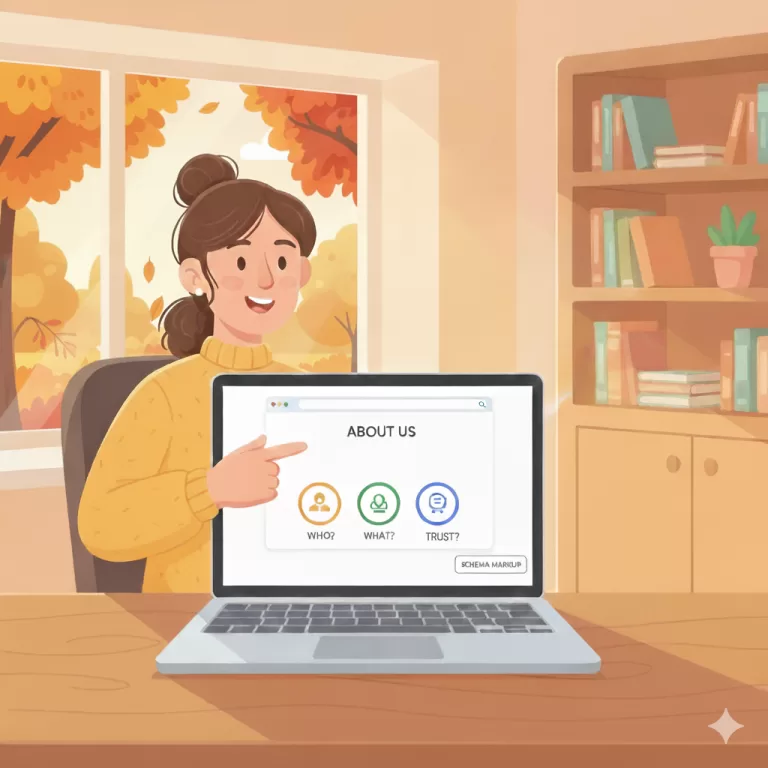
Every good About page makes it easy for both people and search systems to understand three things. These three directly align with Google’s E-E-A-T (Experience, Expertise, Authoritativeness, and Trustworthiness) quality framework:
Who are you? (The Entity name and relevant Expertise)
What do you do? (Your core services and Authoritativeness)
Why should anyone trust you? (Verifiable Trustworthiness and Experience)
If your page answers those questions directly and consistently, you’ve already done more than most businesses ever do for SEO.
Note: If you see the headlines on my About Page, they may read a bit strangely. In the past, I never would have used “Who is Steve Tannuzzo?” over something warmer like “Meet Your Marketing Pro” or “Steve Tannuzzo, Copywriter and Marketing Expert.” But here, we are appeasing the Googlebots. “Who is Steve Tannuzzo?” is the key to establishing the purpose of the page. And that helps with how you rank on search engines. So, while it does bend my “write for humans” rule, it’s a worthy concession in exchange for more traffic to your website.
10 Best Practices for an E-E-A-T-Focused About Page
Step 1: Use a Descriptive Headline Don’t Use “About Us.” Instead, use a headline that tells people and Google exactly who you are. I might use: Who Is Steve Tannuzzo? | Content Marketing & SEO for Massachusetts Small Businesses That headline instantly identifies name, focus, and region. Those are the three elements search engines use to recognize you as a legitimate entity.
Step 2: Start With a Direct Answer Open with one short paragraph that summarizes who you are and what you do. Example: Steve Tannuzzo is a Massachusetts-based content marketing and SEO professional who helps small businesses get noticed and get business. As founder of Tannuzzo Creative in Marlborough, he provides copywriting, SEO, marketing strategy and more, turning clear, authentic messaging into measurable results. That summary gives both readers and AI models everything they need to understand your Expertise.
Step 3: Documenting E-E-A-T Signals Instead of long stories about your career, use simple bullet points or short sentences that highlight your experience, certifications, and leadership roles. These clear facts are Trustworthiness signals that matter as much to algorithms as they do to people.
Step 4: Make Your “Why” Obvious Don’t just describe what you do; explain what makes you different. This is where you show the value behind your work and reinforce your unique Authoritativeness.
Step 5: Optimizing for AEO/Voice Search Write your section headings as real questions that potential clients might search. What Services Does Tannuzzo Creative Offer? Who Does Tannuzzo Creative Work With? These natural-language phrases help Google match your content to real-world queries and make your page easier to read for Answer Engine Optimization.
Step 6: Add an FAQ Section Pro tip: Include three to five short questions clients often ask before hiring you. Give concise answers in under 60 words. This format builds trust and gives your page a chance to appear in Google’s FAQ-style Rich Results.
Step 7: Establish Clear Attribution and Authorship Include your name, photo, and a few personal details: where you live, your hobbies or community ties. This makes you relatable and helps Google confirm you’re a real person connected to a real business, boosting your overall Trustworthiness.
Step 8: Make It Easy to Reach You Every About page should guide visitors to the next step. Replace vague calls to action like “Click here” with descriptive links such as “Book a Discovery Meeting,” “Request a Quote” or “Schedule a Consultation.” That language also reinforces and fortifies your brand identity.
Step 9: Implement Structured Data If you use Yoast or RankMath for SEO, you can leverage their tools to include Structured Data for the Person, Organization, and FAQPage entities. This invisible code tells Google exactly who you are and how to classify your content, maximizing your chances of appearing in Knowledge Panels and AI summaries.
Step 10: Applying Your Schema Markup Schema markup is the hidden code that helps Google and AI tools understand your business facts: who you are, what you do, where you’re located, and how to reach you. You don’t need to be a developer to add it. You just need to collect the right details and use a plugin like Yoast or RankMath to apply them correctly.
Why It Matters
Adding Structured Data once tells Google exactly how to connect your website, name, and brand across the internet. This strengthens your visibility in both search results and AI-generated answers.
Your About page is the anchor of your digital presence. It’s where Google decides if it can trust you (via E-E-A-T) and where AI systems decide if you’re credible enough to mention (via AEO). Most business owners spend hours polishing blog posts but only ten minutes on their About page. But that one page validates everything else you publish.
Need help? Confused by all the acronyms? Just want more new clients?
Contact Me to build your Google-ready, AI-friendly About Page.